
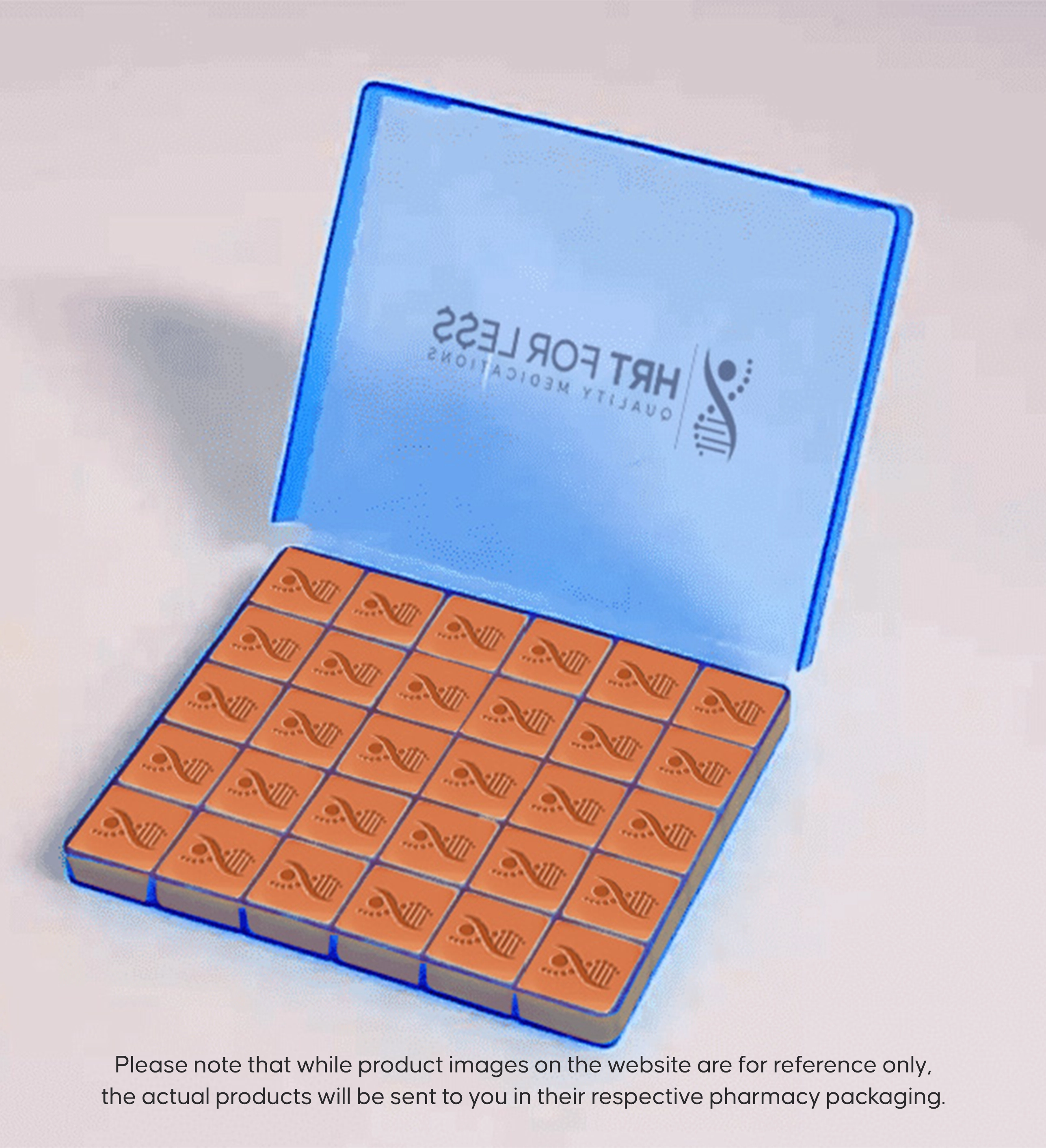
Troche • Standard • 1 count
$7.00
Form
Strength
Quantity
Hormone Replacement Therapy Information
Overview:
Hormone Replacement Therapy (HRT) is the replacement of deficient hormones with hormones that are chemically identical to those that the body naturally produces, but which have declined due to aging or illness. HRT has improved the quality of life for millions of women and men who suffer from hormonal imbalance. The ideal process for achieving hormonal balance includes an assessment of hormone levels and complete evaluation of signs and symptoms, followed by replacement of the deficient hormones in the most appropriate dose via the most effective route, and monitoring to fine-tune the therapy.
Estrogens, progesterone, and androgens are just the "tip of the iceberg" when it comes to achieving hormonal balance. Thyroid and adrenal function, as well as nutritional status, should also be evaluated and treated when indicated.
Three-Hormone Cream Contents:
This three-hormone cream contains:
- Bi-Estrogen
- Progesterone
- Testosterone
Estrogens:
Estrogens are a group of related hormones, each with a unique profile of activity. They are often prescribed in combination to re-establish a normal physiologic balance. The use of one or more of these hormones is referred to as Estrogen Replacement Therapy (ERT). Estrogens have been shown to be clinically effective for the treatment of:
- Menopausal symptoms
- Postmenopausal problems including vaginal atrophy, dryness or infections, painful intercourse, and various conditions of the urinal tract
- Decreasing the risk of osteoporosis and colorectal cancer
Progesterone:
Progesterone is commonly prescribed for perimenopausal women to counteract "estrogen dominance" and minimize the risk of endometrial cancer in women who are receiving estrogen. It is preferred by women who had previously taken synthetic progestins, according to a Mayo Clinic study. This may enhance the beneficial effect of estrogen on lipid and cholesterol profiles and exercise-induced myocardiac ischemia (reduced oxygen supply to the heart muscle) in postmenopausal women in contrast to progestins, such as medroxyprogesterone acetate (MPA).
Androgens:
Testosterone and dehydroepiandrosterone (DHEA) may be added to a woman's hormone therapy to alleviate recalcitrant menopausal symptoms and further protect against osteoporosis, loss of immune function, obesity, and diabetes. A decline in serum testosterone is associated with hysterectomy, and there are age-related gender-independent declines in DHEA and DHEA-sulfate. Additionally, ERT may cause relative ovarian and adrenal androgen deficiency, creating a rationale for concurrent physiologic androgen replacement.